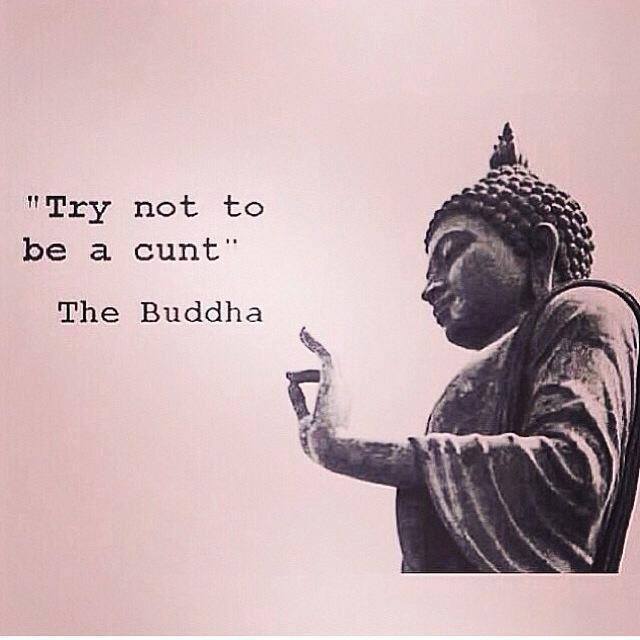
The Golden Rule…
A few years ago, a friend of mine asked me the question “If you could have two wishes granted by an all-powerful, all good, all knowing genie, what would they be?”
I thought for a few seconds and then answered “I don’t need two wishes. I only need one.”
My friend argued with me briefly that, based on a complex logical analysis, I really did need two wishes, the first of which was to set up the conditions for the second one.
I repeated, “I don’t need two wishes. I only need one.”
He replied, “Okay, what is it?”
“I would wish for what is best.”
He continued to try to find reasons why his analysis was superior to mine. To each of these I replied “Would the results of your wish be better than the results of mine?”
“Yes. And here’s why…”
I patiently explained that the results of his wish could not possibly be better than mine, because I wished only for what was best. By definition, nothing could be better than what is best.
He countered that with “But what if what is best isn’t what is best for me?”
That was a little bit more difficult than the original question of what to wish for in the first place, but I shortly realized the answer wasn’t much more complicated: “Then you should change so that what is best is best for you.”
I believe this is within the reach of each of us, and if we accept the challenge, the world will be a different and better place.
From Link.
Concentration – Counting Breath.
Concentration is an invaluable aid in anything you do, and also vital to any meditation technique.
Ironically, certain meditations also develop concentration, which is the main purpose of the “counting breath” exercise. However, it also has “integrative effects” on the entire being.
This is a breathing technique that can be done passively or actively – in other words, you can either let your body breathe normally, or control your breathe consciously. Try it both ways, and after a while you’ll be able to tell which method is the most effective for you.
DOING IT:
Start by getting into a sitting position that allows you to be comfortable while maintaining a straight spine.
Next, start counting your inhalations and exhalations. For instance, when you inhale for the first time, think silently to yourself, “one”. Then when you exhale, again think “one”. The next time you inhale, do the same thing, but this time count “two”. The same with the exhalation. Keep counting silently to yourself like that, until you get to ten. After you reach ten, then start over again from “one”.
The goal is to eventually get to where you can do five “sets” of counting one through ten, while you keep your thoughts only on that. If your mind wanders and other thoughts pop in, don’t get angry or frustrated, just start over again.
As with all your exercises, be patient. It takes practice and time to master. As with anything, the more you practice the better you get. If you are consistent and persevere, the results/benefits will eventually come.
We’re All Connected – Symphony of Science.
With English Subs.
MP3 available at http://www.symphonyofscience.com.
“We Are All Connected” was made from sampling Carl Sagan’s Cosmos, The History Channel’s Universe series, Richard Feynman’s 1983 interviews, Neil deGrasse Tyson’s cosmic sermon, and Bill Nye’s Eyes of Nye Series, plus added visuals from The Elegant Universe (NOVA), Stephen Hawking’s Universe, Cosmos, the Powers of 10, and more. It is a tribute to great minds of science, intended to spread scientific knowledge and philosophy through the medium of music.
Check out “A Glorious Dawn” by Carl Sagan, another Symphony of Science project!
How to Write Subtext
The Mystery of Subtext.
by Hal Croasmun
For most people, subtext is the most elusive of all the writing skills. You ask a writer about subtext and you’ll get a vague answer that will leave you confused. Why? Because many of the best writers of subtext operate primarily from intuition. So they don’t have a conscious structure they can teach.
But there is a structure to subtext and it can be learned.
The quality of your dialogue can be dramatically improved by building in meaningful subtext. Well written subtext is the mark of a professional writer. On the other hand, constant on-the-nose (OTN) dialogue is the mark of an amateur writer.
Below, I’ve analyzed the subtext in the first three pages of AS GOOD AS IT GETS written by Mark Andrus and James J. Brooks. When you read it, along with my notes, you’ll understand why producers say that they can tell if a writer is any good in the first five pages. Keep in mind that this is what you’re up against when you send a script in.
Remember, subtext plays a vital role in bringing a script to life. It takes the movie from an external projection on a screen to an internal experience that an audience can live and enjoy.
Read my notes from these three pages and you’ll understand why subtext is so important.
AS GOOD AS IT GETS – Film Script Excerpt for Analysis.
ANGLE ON apartment doorway. As it opens and an enormously SWEET-FACED, ELDER WOMAN steps out, bundled up against the cold — turning back to call inside to the unseen love of her long life.
SWEET-FACED WOMAN
I’m just going to get some flowers, dear. I’ll be back in twenty minutes. It’s tulip season today. I’m so happy.And now she turns and faces the hallway… her sweetness dissolves in a flash… replaced by repulsion and that quickly she has reversed herself and re-entered her apartment… closing the door as we consider her vacated.
SUBTEXT NOTE: Without a word from Melvin or the Sweet-faced woman, we get the message that Melvin turns people off. This does two things. First, it delivers a subtext message about Melvin. Second, it sets up future subtext by instantly causing us to suspect anything Melvin says.
POV – MELVIN UDALL
in the hallway… Well past 50… unliked, unloved, unsettling. A huge pain in the ass to everyone he’s ever met. Right now all his considerable talent and strength is totally focused on seducing a tiny dog into the elevator door he holds open.
MELVIN
Come here, sweetheart… come on.
SUBTEXT NOTE: The description of Melvin is a complete design for subtext. If Melvin is “unliked, unloved, unsettling, a huge pain in the ass,” then anything nice he says will be considered through that description. Melvin’s first words are a SCAM he’s running on this dog and ultimately it’s owner. Melvin says “Come here, sweetheart.” and we interpret that he’s luring the dog.
ON DOG
Sniffing at a particular spot on the hall carpeting. Melvin lets the elevator door close and advances on the mutt who has ignores him.
MELVIN
Wanna go for a ride? Okay, sweetie?The dog lifts his leg at the precise moment Melvin lunges and picks him up with a decisive heft — so that dog urine squirts the hall wall for a second or two. The DOG sensing a kindred spirit starts to GROWL and BARK.
MELVIN
(a malevolent tone)
You’ve pissed your last floor, you dog-eared monkey.
SUBTEXT NOTE: At this moment, our suspicions are confirmed. Melvin means harm to the dog. This is the point where the true meaning of the subtext is revealed. It’s also the setup for subtext that will show up on the next page.
The dog takes a snap at Melvin, but the man is much meaner and quicker than the dog — he holds his snout shut with his hand and reaches for the door of the garbage chute.
MELVIN
I’ll bet you wish you were some sort of real dog now, huh? Don’t worry… this is New York. If you can make it here, you can make it anywhere, you know? You ugly, smelly fuck.And with that, he stuffs him in the garbage chute and lets go. We hear a FADING SERIES of PLEADING “ANOOOOS” from the DOG fade to nothingness… as another apartment door opens emitting the loud sounds of a PARTY and SIMON NYE, early 30s. Simon has been born and raised with Gothic horror and it’s strange that what that stew of trauma has produced is a gifted, decent man.
INT. APARTMENT BUILDING (NEW YORK), HALLWAY – NIGHT
Frantic… he bolts into the hall… Melvin is just about to enter his apartment.
SIMON
Verdell!?!! Here, good doggie…
SIMON
Mr. Udall… excuse me. Hey there!
(as Melvin turns)
Have you seen Verdell?
MELVIN
What’s he look like?
SUBTEXT NOTE: Here, we have another form of subtext — the lie by omission. Also, dramatic irony. We know that Melvin knows where the dog is, but Simon doesn’t know. Once again, Melvin says “What’s he look like?” and we hear Melvin’s unwillingness to tell what he’s done.
Melvin starts to walk back to his apartment door which is directly opposite Simon’s.
SIMON
My dog… you know… I mean my little dog with the adorable face… Don’t you know what my dog looks like?
MELVIN
I got it. You’re talking about your dog. I thought that was the name of the colored man I’ve been seeing in the hall.Simon looks O.S. — and sees his black friend.
SUBTEXT NOTE: Here is another form of subtext — misdirection. Melvin’s answer to the question about the dog is to point the conversation toward Simon’s friend and create controversy to cover his crime.
SIMON
Which color was that?
MELVIN
Like thick molasses, with one of those wide noses perfect for smellingtrouble and prison food…
Simon has had it.
SIMON
Frank Sachs — Melvin Udall.
MELVIN
(not missing a beat)
How’re you doing?
SUBTEXT NOTE: Another form of subtext — feinting politeness. But we know that Melvin doesn’t like Frank, so his politeness isn’t real. That will clearly be shown in the next few lines.
SIMON
Franks shows my work, Mr. Udall. I think you know that.
FRANK
(overlapping)
Simon, you’ve got to get dressed.
MELVIN
(to Simon)
What I know is that as long as you keep your work zipped up around me, I don’t give a fuck what or where you shove your show. Are we being neighbors for now?
SUBTEXT NOTE: Here, the real meaning of the polite line above is shown. He wasn’t really being polite, just setting Frank up.
SIMON
(to Frank)
Do you still think I was exaggerating?
SUBTEXT NOTE: This question is another form of subtext — implication. It implies a conversation Frank and Simon had about Melvin earlier. With this question, we experience the conversation without it ever being on the screen.
FRANK can only smile.
FRANK
Definitely a package you don’t want to open or touch.
SUBTEXT NOTE: Another form of subtext — metaphor. What Frank is really saying is that Melvin is so disturbing that they shouldn’t talk with him -an innuendo, which is a language pattern of subtext. But saying it through the metaphor of a package is much more elegant than blurting out an insult.
FRANK can only smile.
MELVIN
Hope you find him. I love that dog.
SUBTEXT NOTE: Politeness, lying, what else would we expect from Melvin? How about sarcasm? Another language pattern of subtext.
This is a very well written script. They use subtext well without overusing it. Notice how we as an audience are clued in on most of the meaning of the subtext. It adds to our experience of these characters, without frustrating or confusing us.
Let’s take a look at what has happened in the first three pages of AS GOOD AS IT GETS. We have excellent examples of:
- Five of the seven internal states of subtext.
- Three of the ten methods of subtext cover-up.
- Four of the eight language patterns of subtext.
- A character specifically designed for subtext.
- Two of the eight methods of designing a scene for subtext.
There are two extremely important things you need to know about this script:
1. Notice how all this subtext has made Melvin a very interesting character — a character so compelling that Jack Nicholson decided to play it. This script was written for casting. Each character is designed to attract an A-list actor and subtext played a big part in that.
2. Just as important, this is the level of your competition when you send a script to Hollywood. Professional writers use subtext well. Their scripts give an audience an internal experience of the movie. When readers recommend a script, this is the kind of work they feel will justify a recommendation.
Article from this link.
Dark Night of the Soul…
The Dark Night of the Soul: Everyone’s Journey Through One Man’s Eye…
By: Vajra Krishna.
Review: “…I felt like being reborn… no matter what else I read, what great books, the simple fact that I am sure you are real. And… the more I was reading… the more liberated I felt somehow… After reading it you can never be the same… you are joyful. And you begin to love yourself. And accept yourself. The hook is your sincerity. The need to still be there… in your fight in order to see more about myself. And while I was reading… indeed, I also realised it was about loneliness. I thought that a magikian is one who learns about himself, who discovers himself and who sees the world reflecting itself in every human being… or a Goddess in every person. But as I went on reading, I realised that you never discover yourself until you don’t see, but actually feel the world as within yourself.”
Buy a Copy Here: http://www.lulu.com/content/5242536
Screenwriting Course Feedback
A Feedback letter to the Course Administrators of the RKF International Screenwriting Course, lectured by Anjum Rajabali and K. Hariharan (with a dissertation on dialogue writing by Atul Tiwari). Conducted by Kamal Haasan. Not only a review of the lessons in the course, but also an in-depth analysis of the many discoveries and revolutions in screenwriting that I have come to understand through the span of 10 years:
I suppose the first step here would be to explain a little on where I am coming from so that my feedback on the Workshop will have a clearer perspective for you. The first screenwriting course I did was back in 1998, in Canberra University, Australia. I distinctly remember the lecturer expounding on the 3 Act Screenplay, but most especially I recall that being my first introduction to the Hero’s journey. Perhaps it was a lack of life experience and foresight, or perhaps it was the nature of the course itself, but I remember the Hero’s journey being a weak and finicky set of guidelines lacking in any real sense of depth. I quickly forgot all about it and moved on.
Now it has been 10 years, and I feel I have come full circle – once again revisiting the Hero’s Journey through Anjum Rajabali’s crystalline insight; and suddenly it is made clear to me at a point where I have the capacity to better understand it. You see, 10 years ago I had an inkling of why I wanted to be a storyteller… I dreamed about creating paradigm shifts through my stories and films; shifts in the way people thought and viewed the world. Since I myself had a small taste of this profound effect that a few films can have, I was determined that the craft was a worthwhile investment of the soul.
But the idea of investigating life and its meaning through storytelling was functionally lost on me. It existed only as an instinctive knowing that yes – this is possible! But on the whole, as much as I exasperated, I was unable to fuel insight and wisdom into my stories. For that, I suppose, I needed to live a little. To fall down, and rise up – and understand the profound miracle of what it means to rise up. I went in search of experience, and gave everything up – travelled a lot, lived as a hermit for a few years and threw myself into strange spiritual paradoxes that ordinarily passes you by. In effect, I was merely gathering material. Which inevitably comes to a point where you empty your cup and realise the material was within you all along. Even for that, you need to come full circle.
Coming full circle, Anjum begins to explain the Hero’s journey like a flaming arrow going to the crux of storytelling itself: Mythology helps us understand interiority. I had pondered mythology like a lifeline, I had written compulsively to externalise internal thoughts… yet this insight was a vital link that I had hitherto not anticipated. It validated and made sense of years of rich material that I was waiting to put to use. Suddenly, under the very construct of Anjum’s musings on the Hero’s Journey, my mind cleared and everything seemed to fall into place – options were made available where none seemed possible. Perhaps it seems I am overstating, yet believe me, for one who is intensely passionate about going to the heart of any given thing, this was a revelation. Mythology was not merely good material for me – it has been the pulse of a mystical creation symbolically told. The idea that we can fathom our own existence by our stories was always present, the door was visible and closed – but I needed the key.
After that moment, the course became transformative. At this point let me retrack a bit to set the scene… The second course on screenwriting I did was in 2004 with an Australian writer/filmmaker named Leslie Oliver. He brought a unique insight to storytelling that I don’t think I will ever forget – not merely for the fact that it is so simple but also that it is so revealing. He explained that “character is story, story is character.” I know we speak often in screenwriting circles about the importance of character, but few go so far as to state this inexplicable link. Most of the time, we find a difference between our stories and our characters, but not with Leslie. His technique was to observe the obscure moments of life by which to fathom a character that invokes us to explore him or her, and in placing that character into a conflicting situation, we see them develop. He felt that nothing else is really needed except this, in order to tell a powerful story. He spoke about writing as akin to sculpting; what you are doing in effect is chipping away on a slab of stone to uncover the nightingale already waiting within it.
This was so far removed from my first course in Screenwriting, which was formulaic in comparison, that after the course with Leslie Oliver, I seemed to find most of the other available courses were expounding mainly on the dastardly “character arc”, and I lost interest in going to any more workshops. Of course I was developing stories along the way, and getting stuck with some. Festering – I should say, living with my stories for years, developing them slowly. Time passed. Much happened.
I felt a certain knack for creating a breathtaking symmetry in skeletal framework for my screenplays, and it wasn’t until recently that suddenly my entire understanding of storytelling was shattered by an American playwright/screenwriter named Billy Marshall-Stoneking. At the culmination of 2008, just as I was arranging to come to India, I stumbled across Stoneking’s advert for his screenwriting course. He spoke of mediumistic, tribal storytelling. Mediumistic?! Tribal?! These words resonated deeply, as quite a part of my life was engaged in mediumistic spirituality – where ethereal beings were simply “channelled” into the body (the owner of the body handing control for a few moments), whilst the visitor inhabited. And it rang true, the moment I read two otherwise unrelated words grouped side by side. Mediumistic storytelling. Billy was a man who had spent a large part of his life living with aboriginal tribes and assimilating a sense of universal storytelling through a powerfully primal form – from the very origins of tribal consciousness.
Yes, it made sense. I had passed across several writers who spoke of living with their characters, of their characters voices in their heads, of their characters existing in their own right. I had always found this very intangible, as I only heard one voice in my head. Mine. No one elses (or so I thought). So, the entire idea of having a conversation with someone other than myself in my mind was more than a little unfathomable. Yet I longed for that intimacy I had read authors speak of in interviews – that profound intimacy with their characters where they even speak to them. Until then the sort of intimacy I shared with my characters were more the fodder of potent emotions begging exploration, rather than voices. Yet that is semantics really. Where the emotions manifest as thoughts, or vice versa, is almost seamless.
I decided to be honest and emailed Billy, explaining to him that I’ve been through a whole load of courses on screenwriting and have hardly come across anything new these days, so I would very much appreciate it if he would be forthcoming with me whether he’s got anything new to say or not. Yes, I was blunt, but respectful. His reply was to enigmatically encourage me to come along. And, as curiosity always gets the better of me, I went along to see what he had to say – without judgement.
What transpired was my mind shut down – not in any negative sense, but in the profound realisation that every rule I seemed to have set myself about screenwriting flew out the window. Because Billy was speaking of “dramatic storytelling” in a freshness that invoked, provoked the listener to drop their ideology and approach screenwriting with utter vulnerability. Let me summarise the kind of thinking he directed at you to confound everything you thought you knew for a fact:
• The whole thing is about transforming: every scene should hold a transformation.
• Dramatic intelligence is the art of becoming present.
• The intersection of the origins of the characters with the origins of the writer is what brings freshness to a story.
• You’re dealing with dead people, and you’re trying to make them alive. You are also dead. You become alive by writing… They are dreaming you, and you are dreaming them.
• The fundamental question you must ask yourself: What is your character fighting for?
• Drama is really an exploration of frustrated desires. Drama is essentially about anxiety and overcoming anxiety.
• Who is it that you are speaking for? Or more intimately: who is speaking through you?
• The truth is revealed in the face of opposition.
• We must journey on as if we are blind – if we look down, we will fall.
• Write the story that terrifies you the most. Go into the mouth of Kali.
• The screenplay world and your world are inexplicably connected… And whatever you do in one world will impact the other.
• Art never explains. Every time you explain what you are trying to do, you are trying to avoid a fear!
• The one thing of no use to a dramatic storyteller is knowledge, because knowledge gets in the way.
• This is the art of the invisible! In what is not said. In what is not shown.
• There are characters that want to come out. That are imprisoned by the writer’s fears. We project our fears and that drops the potential the characters actually have.
• When we hit the wall, we have to drop our expectations, because the wall is a manifestation of our expectations.
It is this aspect of hitting the “wall”, that was the crux of his unique way of seeing this ancient artform. That, inevitably, in every story, the writer and his characters will reach a point of critical conflict where he is forced to live it through his characters – and at this point most writers take the cowards way out. They resort to some rationality, some formulaic way out of the insurmountable situation. And if they do, the story will lose all its power and worth. It is at this point – at this wall, that one must drop everything they think they know, and step into the unknown. Become intuitive rather than intellectual. I would say there is rarely a screenwriting course that approaches storytelling with such bravery. This bravery was deeply appealing, as I had always considered good writing as that rare gift of pouring the depths of your soul onto paper. It felt like a code of honour only wielded by the warrior-poets. For they will not succumb, even in their words.
So it came to be that when I was at the right place at the right time, and invited to attend the RKF International Screenwriting Workshop, I decided to come without any expectations. In several ways Billy had created more questions than answers, and I was unable to pick up the pieces myself. I was stuck as to understand how to push my story ideas forward because his course had demanded of me a complete relinquishing of myself. It had demanded me to set myself aside and let the characters write through me.
I succeeded, and through the workshop created stories where I was so utterly surprised by the outcome, and since my own transformation was honest, I could see its effect on the audience. But as for applying this methodology to stories I had already developed upto treatment stage, I was unable to find the balance. This is not to say that my previous stories were so manufactured that they needed to be discarded. Rather, I am an unrelenting perfectionist – and I wished to imbue my entire body of work with this newfound insight. I realised that I had been hearing the voices of my characters all along, yet my fear had been stifling them.
I think you may understand now why I opted to give this explanation of what brought me to the point of your workshop, as it does set the scene in revealing what transpired within me throughout the phenomenal six days.
Firstly, I did not expect for Anjum, Hariharan and the majority of speakers to extol this very same bravery from us in our writing. That took me by surprise, and it was then that I realised that I was right where I was supposed to be. To divulge step by step:
DAY 1: PREMISE/CHARACTERISATION.
I have believed for a long while now that the real meaning of “literacy” is not the assimilation of information, but rather – to learn the skill of questioning what is before you – not taking anything as a given, but discovering for yourself. For that to work, the uniqueness of the individual is imperative. It is this uniqueness that produces originality, and I had a deepening sense of relief to witness that Kamal Haasan and the lecturers were acutely aware of this and were giving it utmost importance.
For a long time now in screenwriting circles the premise had been taught to be the fundamental moral of the story – the core “message” of the film. Yet on day one of the RKFI Course, Anjum explained the premise to be something else entirely – although he acknowledged that it is often known to be a moral, he insisted that a premise is better known as the “lock” of the story. That is, the culminating incident to which the entire story is built up, and thus resolved.
At first, I didn’t see why this difference in definition was even necessary, but as I began to ponder the issue, and moreover, apply it to my own stories, it soon became crystalline that this particular use of premise is far more useful in the construction of a screenplay. Because we are then dealing with the crux of the story itself, its very backbone, and thereby are constantly aware of where we are going off on tangents, or staying true to the heart of the story. As opposed to a moral or theme, which may speak for subtext, but on the whole does not define the constructs and motivations of the characters.
It became apparent that this particular definition of premise is most elevating for a writer on his/her journey of discovering characters and the situation of conflict they find themselves in. It brings focus on the conflict in very specific terms – relatable only to the story being told – it enables the writer to be unique and fresh in the telling. Suddenly, the “premise” had a use in the process of writing, and was no longer a musing on the tale.
Hariharan then presented, in his analysis of characterisation, what appeared at first notice to be an opposing approach. Whilst Anjum was fused with conviction in the intuitive magic that exists within writing, and was presenting ways in which to allow such intuition to “reveal” itself to the writer, Hariharan seemed passionate about the mechanics – about construction in a surprisingly mathematical precision. I would guess that for most delegates at the course, this would have posed an element of choice – of deciding one way or another. It certainly did for me, as I felt at home with the fire of intuition that Anjum had spoken of, and had often dismissed the need to totally intellectualise or feign the mechanics of the writing process. I am certain others would have felt more at home with the mechanics, and perhaps even puzzled at the notion of giving so much importance to intuition.
Yet, I was sitting in the course with already a dilemma at the back of my mind. The one that Billy had created, by persuading me with fine fuzzy zen-like logic to do away with any sort of mechanical approach – which I had on the whole found next to impossible. No matter how intuitively culminated, there would always be a strong mechanics in the structure of my stories that I was unable to do away with.
Pondering the contradicting approaches of both Hariharan and Anjum, it eventually dawned on me that this is indeed a right brain/left brain issue. That is, the optimum function of an individual is when both are in balance, when creativity and logic are simultaneously active and complimentary to the other. Suddenly, Hariharan and Anjum did not seem so far apart, and in imagining how both can be applied to the process of writing, slowly a clarity began to settle upon me.
For this reason, I felt it remarkable that the course syllabus was formed to represent two (or more) seemingly opposing ideas as a tangible whole. This aspect of opposing ideas co-existing was a recurring theme throughout the course, and one of its crowning virtues – it oft reminded me of the tantric saying: “The truth can only ever be told in the contradictions. Or… in silence.”
If anything, it would have placed the attentive listener in the predicament of not walking away with set rules and constructs – but rather inspired an openness to the writing process itself. In a worldwide education system that is surely failing because of its spotlight upon memorising a panorama of rules (and soon forgetting them), I was kindled with a vigour to witness a better method of teaching.
DAY2: STRUCTURE.
The finely tuned exploration of how a dilemma is built to a critical mass – being the engrossing topic of the second day. A few of the things that really stood out for me and have instilled themselves implicitly are:
• Change can only happen in a person capable of change.
• The nature of heroism is unintentional – a man is provoked into heroic acts – and heroism is not in and of itself a grounding motive.
• Tragedies are where characters are unable to resolve their dilemma.
• Subplots throw light on hidden dimensions of the main plot.
• Theory of dialectics: The opposite of something exists within itself.
In essence, the fundamental lesson here was that there must be an internal conflict within every powerful scene or sequence, a conflict that reveals itself through subtext or subplots, all intimately linking back to the premise. At this point, the premise becomes infinitely pivotal – every moment of the film holds a premise, contributing to an underlying premise that drives energy to the entire story.
Ultimately bringing home the essential masterstroke of every piece of art – show, don’t tell.
Of course, this point is made almost always in writing courses, yet to demonstrate the point also requires a lucidity that gives the student enough breath to recompose and integrate it into himself. For this, reason, I valued Anjum’s approach – he had carefully highlighted the underlying facet of conflict as in itself revealing the subtext. This essentially enables the aspiring writer to not find subtexts so mysterious. Which meant only intuition would decide the immaculate and fresh circumstances in which the characters find themselves.
Yet even this intuition is more guided by observing life, rather than observing film – it is a dance between the two – of translating those obscure moments that are so definitive of life into the language of film. So, the premise is more about deriving meaning out of existence, meaning on existence itself – that is the invariable link between life and film – every moment of every situation becomes meaningful in stories, and thereby gives meaning to life. Stories become sacred because they eradicate the pointlessness of existence. They become mythic because they remind the lost about the forgotten.
Everything became tangible here for me – it is essentially about dilemma, and surprisingly, a dilemma of the soul, making it an exploration of spirit – even if, in film, it seems simply like a character exploration. For why else is a character invoked into heroism, and into changing, if not to better himself into something intuitive. Why else is a writer invoked to forsake all knowledge and write with a divining sense of intuition, had it not been proved through the ages that only this kind of writing creates timeless art. More than about character, it was about the spirit within the character. For otherwise, intuition (and instinct) would not be so crucial. It would simply be another word receiving lip-service.
DAY 3: DIALOGUE & DECONSTRUCTION.
This was the central letdown in the course. Through all that Atul Tiwari was expounding, be it the history of dialogue writing, and especially examples of the best forms of dialogue – the one thing, the primary thing – that he neglected to divulge was the PROCESS of dialogue writing itself. I did ask a few questions pertaining to his writing process, but did not get an insightful response.
The main aspect of dialogue writing (especially in Indian films) is that quite often screenplay and dialogue are not written by the same people. Yet Anjum had spoken at length about the necessity to spend an intimate amount of time living and breathing your characters, imagining them living alongside you and better understanding their motivations and characteristics. So much investment is made upon the characters to understand the emotions that rule them.
Having bled with your characters, finally you emerge out of the dark night with a reckoning screenplay, and are about to collaborate with a dialogue writer. I have full faith in the specific mastery of dialogue writing – I understand that it is entirely a different skill to writing screenplay or understanding time and space pertaining to plot. It is for this very reason that I wanted to delve deeper into this skill of the dialogue writer, to see how he is so quickly able to assimilate the characters that the screenwriter has been developing for months, and furthermore to understand their vocabulary and style and manner of speech. Hopefully in future courses this aspect of dialogue writing would be explored for the students. A greater focus on process would be far more helpful, I feel, rather than a demonstration of the history and evolution of dialogue writing (unless this evolution also is made to tie in to the “process”).
I am glad however, that the lecturers chose to emphasise that one must think of the characters as having an “independent” personality – that you, in effect, are not creating these characters, but pushing them, reacting to them, and evolving and transforming with them. You are walking beside them, not manufacturing them out of lego pieces.
The revealing of how subtext is used in films was quite instructive. It was a divulging into the “non-active” power that exists in films. The power of the silence, the power of what is not said. Nothing offers as much window into reality and the exploration of real dilemmas as the use of “what is not shown.” As Eisenstein would put it; “the art of the invisible.”
Which inevitably lead to the deconstruction of the screenplay, lectured by Hariharan. Immediately beginning with the proposition: Consider time also as a character. I was astonished to witness the detail to which the 7 minute intro sequence of Satyajit Ray’s film was broken apart and analysed with piercing and remarkable judgement. Without exaggeration, I sat mesmerised, and secretly hoped that Hariharan would continue to analyse the entire film with this prowess of film language.
With illuminating precision, the nature of the objective/subjective link in film was explored, coaxing the eager student to grasp the rudiments of great storytelling.
DAY 4: HERO’S JOURNEY, PROCESS & INDUSTRIAL ASPECTS.
“A writer’s inspiration enters you through your fingertips.” – Anjum Rajabali.
There are things we instinctively know – things like the virtues: no one ever disagrees that to be a hypocrite is a vice, not a virtue. And that to be honourable is a virtue. These aren’t social rules, or political ones. It is intrinsic to our very being. That is the essence of instinctive knowing – where suddenly your tribal or cultural affiliations, or where you come from doesn’t make you so different to the rest of us, because there is an underlying unification in our consciousness.
However, as much as we have this knowing, we are for the most part unable to see the heart of it, see the fodder from which it comes, and how it manifests. For this very reason, for a long time I believed in the power of storytelling, yet was unable to find the words to express its imminent role in one’s identity. Because for the most part, people would rather convince themselves that stories are merely a squandering type of entertainment to escape boredom. This superficial idea is often so powerful a paradigm, that entertainment itself seems to have succumbed to this very definition, and attempted to do just that – quell boredom.
The thunderous roar of the warrior-poets, who would weave stories in the hearts of their countrymen to inspire courage, to dispel fear, and to mostly, urge them to discover themselves – all of this innate power of storytelling is often forgotten. So it was, that when Anjum divulged the apex of the hero’s journey as essentially the facing of oneself (as proposed by Joseph Campbell), everything fell into place like the difficulty of a jigsaw puzzle being finally resolved.
Suddenly I had means in which to speak of that which I have devoted my life to – storytelling itself – I had means in which to speak of its dominating influence within society without being vague, or sceptical. Since that day, I had shared the very same insight I had learnt to several acquaintances during dinner gatherings, and have witnessed the clarity and power that settled over them to understand the real nature of stories.
Mythology in itself is a misunderstood word. I remember a few years back deciding to read about Jesus not as a historical figure, but as a fictional character – and was surprised to find how much more power he had over me, how much more influence. I then tried the same with the ancient Puranas, and to date have rarely come across stories so rich. Does it matter if it is fact, or fiction? More to the point, is fiction, by definition, a mark of what is not real… or is it that which signifies everything we value to be real! Therein lies its power.
Isn’t it so that the wisdom within the myths are more valuable than the question of whether it really happened? As Campbell repeats again and again, myths exists to show us solutions to our own dilemmas. Science itself is more an assertion of what has not been “proved” wrong, rather than what has been proved right. To the discriminating eye, there are no facts, and fictions become far more magical – magic itself becomes the reality. This is why writers give up the world, this is why they bleed, why they want to relinquish their own souls in order to discover themselves through their stories.
Just as the character discovers himself at the culmination of the hero’s journey, the writer is being transformed alongside him. But only if he is approaching it in an intuitive process! Which is why Anjum was insistent on this specific kind of writing, as was Billy. The hero’s journey, ultimately, is the visual representation of an otherwise invisible struggle of self discovery. Of facing your own fears. These things, quite often, happen in darkness, it happens often without anyone close to you ever discovering what you are going through. Yet with these stories, the world can intimately relate to you, because it is what they themselves are experiencing. This is why they revisit the majestic cinema!
Coming full circle – on this day, the pieces fell into place, and all the contradictions of storytelling that I had learnt became a potent oneness of expression.
The afternoon of the fourth day amassed a step-by-step analysis of how to create stories for the film industry. A tasteful and grounded counterpart to the deeply invigorating morning.
DAY 5 – DAY 6 –
I think what was very validating for the students was watching the guest lecturers speak about screenwriting within the same constructs and with the same approach as what was impressed upon us within the first four days. Especially since the guest lecturers/filmmakers were totally unaware of what transpired in the last four days in the course, the very fact that their own sharing and experiences corroborated with what was taught affirmed that we were not dealing with theories here, but applications.
Although the fifth and sixth day was an amalgamation of some brilliant minds within the international film fraternity, there is one issue that I wish you to consider: The writers/filmmakers who spoke to us did not seem so tuned-in to the kind of information we really wanted from them. It was not loaded with the essential wisdom a budding screenwriter desperately needs. It lacked the tightness of the first four days. Every now and then the celebrities would make a statement that was amazingly illuminating, but for the most part they seemed to talk in tangents. I think the purpose of having seminars in the last two days was to very specifically study the guest speakers’ process and development with screenwriting. Sometimes though I got the feeling the guest lecturers forgot this.
Perhaps if the prominent writers had it in their mind to speak to “themselves as beginners”, and to tell themselves the kind of things they would have wanted to know, it could improve the course immensely. Instead, for quite a substantial amount of the two days, what we received was a history of what these writers/filmmakers have been through… or worse, some industrial trivia that was no help whatsoever. Reflecting back on the mistake by Atul Tiwari in describing the history of dialogue writing, perhaps it is easier for a person who is unprepared to describe the history of things without ever going to the heart of it. I do request that you find some solutions to avoid this in future.
I must add here that this does not apply to the entirety of the last two days. Jean Claude Carriere, for example, seemed enamoured with naught else but the intricate process of screenwriting, and spoke lucidly about the mechanisms in which to understand it. Aside from that, each of the speakers every now and then delivered some striking wisdom that either affirmed or violently contradicted what was taught to us in the first four days. Either way, I took them both to be valid, because by then I had understood that the confusion that comes from contradictions is more helpful than harmful.
By the end of it all, I remember still being a little puzzled about what was said about dialogue writing, so I approached Rituparno Ghosh (his film from the night before, Dosar, still fresh on my mind), and questioned him about his prowess in writing such fresh dialogue.
I said, “How do you write your dialogues?”
He replied, “After a point, my characters write the dialogues.”
That seemed to summarise it all, and I have meditated upon that insight ever since.
Some unforgettable statements from the course:
“Mythology is the need to contextualise oneself. Mythology deals with denials and the understanding of denials.” – Shekhar Kapur.
“Scriptwriting is about how to catch the desire of the audience and how to hold that desire. What is credible is whatever the spectator desires.” – Olivier Lorelle.
“The rules of scriptwriting is nothing but a shortcut to a point of choicelessness.” – Shekhar Kapur.
“Language is a miserably inadequate medium to express the richness of emotions, and that is what makes its inadequacy a fantastic subtext.” – Balu Mahendra.
“Your local audience is your global audience. If you win the hearts of the locals, they can take you to the global.” – Bharat Bala.
“You have to enter the dark cave and come out of it all wounded to understand why you are writing the screenplay.” – Rakeysh Omprakash Mehra.
One word that cannot describe this course is: exhausting! Yes, it was an intensive plethora of hours spent, listening to discourses until evening, then analysing a movie during the night, and yet I felt more alive and invigorated, ready and anticipating the next day. Infact, after the movie, groups of us who were of like minds (and even staunchly opposing minds), would gather together to debate what we had learnt during the day – sometimes until 2am – before we decided to rest. And somehow wake up, ready to absorb all over again.
My deepest gratitude to everyone who contributed to a sure-footed step into redefining the standards of storytelling. I found Kamal Haasan, in person, to be wiser than I had realised, and his remark comes to mind, “when mediocrity is set as the standard, then to be a genius means very little.” I feel that several great minds felt a calling to improve things – and feel blessed to have been at the right place at the right time to take part in it. To bring meaningfulness back to storytelling has been my dream also, and feel extremely liberated to be offered the chance to dream it with others.
Thank you.
Vajra Krishna.
If you practice being fictional for a while, you will understand that fictional characters are sometimes more real than people with bodies and heartbeats. – Richard Bach.
Sanity Catch – A Short Film.
Sanity Catch revolves dimensionally around free-will – in its tangibly raw, real, hectically tragic yet simultaneously liberating essence. A positive message is often more powerful when it touches base with the damningly dirty, primal nature of man, when it trancends a dreamscape to engage the observer with situations that hold for them a moral rigidity. It is where the question of free-will – often considered a pseudoscience – truly arrises, coupled with a dash of spirit.
The objective of the film is not to provoke thought. The objective is to still the mind and touch the soul. Where nothing needs be spoken. Where a deep seed of insight within the subconscious of the observer is sprinkled with perspective.
Our Deepest Fear
Our deepest fear is not that we are inadequate.
Our deepest fear is that we are powerful beyond measure.It is our light, not our darkness, that most frightens us.
We ask ourselves, Who am I to be brilliant,
gorgeous, handsome, talented and fabulous?Actually, who are you not to be?
You are a child of God.Your playing small does not serve the world.
There is nothing enlightened about shrinking
so that other people won’t feel insecure around you.
We are all meant to shine, as children do.We were born to make manifest the glory of God within us.
It is not just in some; it is in everyone.And, as we let our own light shine, we consciously give
other people permission to do the same.
As we are liberated from our fear,
our presence automatically liberates others.- Marrianne Williamson.
The Whole Remains Whole – Oneness and Nothingness.
Shiva is the dance
the dancer
and the audience.
The whole remains whole, even when something is taken out of it; what is taken out of the whole is also whole. And when the whole is taken out of the whole, the whole still remains whole.
PURNAMADA PURNAMIDAM
PURNAT PURNAMUDACYATE
PURNASYA PURNAMADAYA
PURNAMEVA VASHISHYATE
OM SHANTIH SHANTIH SHANTIH
Two roads diverged in a woods,
And I,
I realised it was all an illusion
And the woods disappeared.
What is the skilfulness of focusing Attention? Well, the moment you direct your attention into a state of being, it naturally begins to expand with your breathe – growing more real and tangible. The expansion heightens your awareness. In this way do we make the Universe have meaning, purpose and direction. Every choice nakedly proclaiming truth and truth alone, because whatever you focus on is what you become – you are forming reality.
In Buddhism, the Diamond Sutra says, “Where there is perception, there is deception.” So on the one hand, the real task is to transcend perception – but since you are already perceiving, you must realise: whatever you perceive will become your reality. And no one else can tell you their perception is more real, because in essence, both perceptions are delusions anyway. In the ultimate state of things, they are delusions. But here, if one man says there is gravity, and you say you can fly, is he really more right than you? Even if you try, and die. Just because all the evidence points in his direction, is yours really a wasted life? People are born, they grow, eat, work, procreate, and die. It is so meaningless, that if you try to fly and burst your brain trying, what is lost? Just cause you stepped out of a queue of conformity; because to them, everything is pointing towards gravity?
Life isn’t about evidence. It isn’t even about being remembered – though we cling to that as a last resort, having nothing else. No one needs to know. And as for the man who challenges you to step in front of a car to show you that he is right, his life itself is empty and without adventure. The best thing that could happen to him is if he himself steps in front of a speeding automobile, just so that, for once in his life, he could feel the rush of life. Because at that very moment all the options that are available to you flashes before you for a split second before you are hit, showing you your infinite power – that somehow, irrevocably, remains untapped. You will know in that millionth of a second that you can prevent this, but not using confidence, not even with belief – but with something that needs a secret realisation, and without it, gravity indeed seems more real. Just because you let that car hit you because you simply do not believe, because you do not know how to tap that potential in you, does not mean that car is all there is. It is much more worthwhile to imagine what kind of reality would allow you to fly, because that… now that would bring you so much closer to what is untapped in you. So what if you fail? Sometimes I think the only reason why we endure the imprisoning aspects of life is because we know somehow that we can fly. Knowing that, deep down, is what gives us strength. We know that we wouldn’t be here, playing this game, if we couldn’t fly. As dark as it may get – the truth is still the same.
And the Truth is beautiful, for it is everywhere. Even in ugliness.
To find the truth, look in simplicity. There is a grand radiance about simplicity that is unmatchable, that builds on itself in absolute poetry – and yet – has not moved at all. Oneness IS Nothingness.
As the saying goes; when you can walk on water, take the boat…
But when the whole world believes walking on water is impossible, for their sake, question them.
God is belief. Belief is God. Your very ‘intention’ is that which is God. The very ‘act’ of belief is God. God is none other than belief itself.
Shiva from far
And Shakti as you approach the picture…
Victory is Defeat. Defeat is Victory.
Death is Birth. Birth is Death.
Yin is Yang. Yang is Yin.
Wisdom is Compassion. Compassion is Wisdom.
Emptiness is Form. Form is Emptiness.
Oneness is Nothingness. Nothingness is Oneness.
“The truth can only ever be told in the contradictions. Or in silence.” – Osho.